


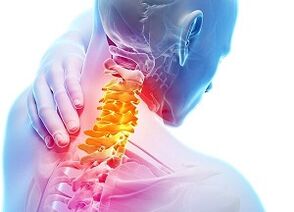
Cervical osteochondrosis (ICD code – 10 – M42) ranks second in incidence after lumbar disc injuries.High daily loads or, conversely, low physical activity, can lead to negative changes in the vertebral structure.
What are the characteristics of cervical osteochondrosis?How dangerous is disc compression and destruction?What are the symptoms and treatments, prevention, and consequences of untreated disease?
reason
Deformations of the cervical vertebral body structure are the result of negative factors and pathological processes:
- bad posture;
- Disruption of metabolic processes due to malnutrition;
- spinal injuries;
- The wear and tear of the intervertebral discs during the natural aging process of elderly structures;
- genetic predisposition to orthopedic disease;
- Lack of physical activity and long-term computer use may cause neck muscle strain;
- Development of infectious inflammatory processes due to hypothermia, exposure to air currents;
- Defects in the development of cervical vertebral structures.
Factors that cause damage to vertebrae, cartilage tissue, and discs:
- obesity;
- Training intensity is too high;
- The head is tilted back or lowered to the chest for a long time while working;
- flatfoot;
- Incorrect body posture when working while seated;
- The cervical spine often suffers micro-injury due to overly strenuous training.
Initial signs and symptoms
In the initial stages of the disease, patients rarely associate frequent headaches, shoulder discomfort, and neck numbness when standing for long periods of time with damage to the vertebral structures.In most cases, there is no effective treatment and the pathology continues to progress.

In the second to fourth stages of osteochondrosis, negative findings in the neck are more pronounced.In advanced cases, negative signals can spread to other parts of the body: hearing aids, eyes, upper limbs.
Doctors recognize several types of characteristic symptoms:
- fundamental.Parietal, occiput, and neck pain syndrome, back and shoulder girdle muscle discomfort.An important point is the loss of shoulder muscle reflexes.Nerve root syndrome is more common in the third or fourth stage of pathology, where the condition of the vertebrae and intervertebral discs is significantly damaged, and the height of the bone structure is significantly reduced;
- Muscle Supplements.Pain in the chest and heart area.Acute symptoms usually occur in the muscles on the inside of the arm;
- Neurovascular.When capillaries and vertebral arteries become compressed, patients complain of headaches and dizziness.
Development stage:
- first.Under the influence of negative factors, small cracks appear in the intervertebral disc, the integrity of the nucleus pulposus is destroyed, fluid gradually leaks out, elasticity decreases, and the intervertebral disc atrophies.A slight creaking of the vertebrae may be heard when the head is moved, and pain and numbness in the neck area may be disturbing when the body is in one position;
- second.Pathology progresses with compromised integrity, rupture, and loss of density and thickness of the annulus fibrosus.The result of the negative process: squeezing the core into the resulting cracks and fractures.The patient's condition worsened and his performance declined.The intensity of the headache increases, the cervical spine becomes stiff, and the face, neck, and arms become numb;
- third.When an intervertebral disc bulges, the structure is actively compressed and its elasticity is lost, leading to disc herniation and herniation.Neurological disorders develop, annulus fibrosus rupture occurs, and the clinical picture is clearly expressed: reflex and radiculopathy syndromes are disturbing.Many patients complain of hand and finger weakness, hearing, and vision loss;
- fourth.In advanced cases, the discs flatten, images show osteophyte growth, and compensations occur to keep the spine in a normal position.The pain symptoms subsided, but the stiffness of the cervical spine remained.
diagnosis

Neck pain, frequent dizziness, decreased mobility and sensitivity in your fingers, and other symptoms of deformative spondylosis are reasons to see a chiropractor, neurologist, or orthopedic traumatologist.Doctors understand the patient's clinical presentation, lifestyle, diet, history of spinal injury, and chronic diseases.It is important to understand the causes of osteochondrosis and identify the factors that cause degenerative changes in the discs between the vertebrae.
Next, experts will examine:
- Tomography - computed tomography and magnetic resonance imaging;
- Vascular Doppler imaging was performed at an advanced stage in the presence of significant neurological disease, frequent fainting, and numbness of the shoulders, hands, and fingers;
- Cervical spine X-ray examination (in the early stage of pathology, this method is not informative).
effective treatment
In the first stages of the development of cervical spondylosis, special gymnastics and topical drugs with analgesic and anti-inflammatory effects are sufficient.The patient must monitor his posture.It is not advisable to maintain one posture for a long time. Be sure to warm up once an hour and do neck exercises every day.
As the pathology progresses, local therapies and gymnastics are not enough to eliminate complex negative symptoms.The degenerative dystrophic nature of these changes affects the mobility of the neck, pain syndromes intensify, herniations and disc herniations occur, and doctors recognize all types of nerve root and reflex symptoms of spondylosis deformans.
Important!Only a comprehensive treatment approach that combines smoking cessation, alcohol withdrawal, and dietary changes can partially or completely correct the condition.It is important to eat right, including foods rich in calcium and phosphorus, fresh vegetables, cheese, and drink enough fluids.Without timely and effective treatment, patients are at risk of becoming disabled.
drug
Doctors choose drugs to eliminate various types of negative manifestations:

- Combat Pain Syndrome.Names with analgesic, anti-inflammatory properties are effective.Your best options are NSAIDs in the form of tablets, injections, gels, and ointments.Additionally, you can take painkillers as prescribed by your doctor;
- Reduce swelling.Diuretics, dehydrating compounds, and hormonal medications can eliminate fluid retention in tissues.Take medications from this group exactly as prescribed: Powerful diuretics may cause serious heart and blood pressure problems;
- Chondroprotectants restore cartilage quality.When elastic tissue is damaged, friction between adjacent vertebrae increases, the density of this layer decreases, and disc bulging and annulus fibrosus rupture may result due to compression of the vertebrae.Doctors prescribe drugs that have a combined effect.Not only does this formula contain glucosamine and chondroitin, it also contains anti-inflammatory ingredients.A variety of multi-component products work well;
- Increases blood circulation to problematic vertebral structures.Doctors may choose blood-thinning drugs and blood-vasodilating compounds;
- Fights muscle spasms.Against a background of weakened bone structure and broken cartilage tissue, the muscles try to maintain the correct position of the spine; overexertion can cause significant pain.To relax tissues, muscle relaxants are used;
- Activate metabolism and increase local immunity.Patients take vitamin and mineral complexes, dietary supplements containing calcium, biostimulants and antioxidants.
physical therapy procedures
Increased impact on problem areas, activation of blood circulation, delivery of medicinal ingredients to affected areas, nutrition, reduction of inflammation – this is not a complete list of the beneficial properties of physical therapy sessions.In addition to taking medications and therapeutic exercises, the doctor will prescribe a series of procedures.
Valid impact types:
- laser treatment;
- Darsenvar;
- drug electrophoresis;
- reverse power flow;
- infrared radiation;
- Electrical stimulation of the affected muscles.
therapeutic gymnastics
With osteochondrosis, it is important to maintain mobility in the cervical spine and strengthen the muscles and ligaments.After examining and clarifying the condition of the affected structures, your doctor will prescribe special exercises for the cervical spine.Simple movements keep the structure elastic and flexible.

Therapeutic exercises for neck muscles:
- Turn your head to the left, then to the right;
- Tilt your head forward and backward in increasing amounts;
- circular motion.At first, the amplitude is very small, and gradually the "circle" is increased, but there will be no obvious creaking sound in the cervical spine.
Perform all movements smoothly, no jerking.During exercise, do not allow excessive compression of the vertebrae or cause severe pain.The amplitude must be gradually increased, otherwise the cervical spine may be damaged.Simple but effective exercises are not only performed during treatment, but also prevent osteochondrosis.The number of classes is two to three times a day, and the gymnastics time does not exceed five to seven minutes.Doctors recommend that people with "sedentary" jobs perform this complex compulsorily every day.
manual therapy
Doctors are wary of realigning the cervical spine.Most experts do not recommend manual treatment for osteochondrosis in this area.The slightest deviation during surgery, a more sudden movement, incorrect application of technique, the entire procedure can result in paralysis or cervical spine fractures with serious consequences, including death.
Osteochondrosis becomes “younger” year by year.In order to prevent damage to bones and elastic structures, you need to pay attention to this important part of the spine every day, perform simple exercises, change your body posture during work, do not smoke, and eat correctly.If you experience symptoms characteristic of spondylosis, you should contact an orthopedic traumatologist or chiropractor.